
What Eureka Resident Lookup Can Establish
A Eureka resident lookup is a set of targeted record checks. The source that answers ownership may not answer residence. The source that records a court party may not show a current address. A directory, yearbook, or obituary can supply history, but it needs a second source when identity matters. Start with the record below that matches the fact being tested.
| Record | What it can confirm | Where | Access boundary |
|---|---|---|---|
| Assessment parcel | APN, situs, assessment context, and ownership information where displayed | Humboldt Assessor and GIS | Free search where exposed; parcel is not proof of residence |
| Recorder index | Party role, deed or lien type, recording date, instrument or book/page reference | Humboldt Self-Service Web | 1979-present index; images and certified copies follow separate rules |
| Superior Court case | Accessible case identity, parties, type, and event history | Humboldt court portal and clerk | Sealed, juvenile, adoption, and protected records stay restricted |
| Vital record | Birth, death, marriage, or limited dissolution event | Humboldt Clerk-Recorder or CDPH | Copy type, eligibility, ID, sworn statement, and fees vary |
| Voter status | One voter's own registration and election details | California My Voter Status | Authenticated self-check, not public name or street browsing |
| Business filing | Disclosed entity role, filing date, and filed address | California SOS bizfile | Affiliation clue, not residence or complete ownership |
| License record | License number, status, dates, and public contact fields when supplied | California DCA and boards | Board rules and published address type control |
| Directory or obituary | Historic address, occupation, household, school, or death context | Humboldt collections | Scope, spelling, and reported relationships need checking |
Humboldt's courthouse, Clerk-Recorder, Assessor, and Elections Office are all local to Eureka, but each office owns a different piece of the trail. Treat the table as a route map, not a promise of one complete record.
Eureka Recorder Name Variants
The Humboldt Recorder calls its index a guide to the underlying document and advises a search for every plausible spelling. Enter last name first, then first name without punctuation. Try middle initials, omitted initials, compound surnames, prior surnames, and common transcription variants. A name-only hit is a lead until the date, party role, document type, and legal description line up.
The index covers official records and maps from 1979 forward. Eligible noncertified web images begin April 9, 1999. Before that point, the name trail moves to bound books at the Recorder lobby. The office does not conduct a title search, so a resident lookup must preserve the instrument or book-and-page reference and request the document directly.
Search the Humboldt Recorder portal before ordering. Card image purchases have a 2.95% provider fee with a $2 minimum, while certified copies use the separate counter or copy-request process.
Breaking a Eureka Same-Name Match
Same-name errors are the main reason a resident lookup needs more than one hit. Anchor the person with a non-sensitive fact such as an approximate era, Eureka street, APN, business name, spouse, case number, or directory year. Then compare roles and dates. A grantor, grantee, court party, SOS agent, licensee, and directory occupant are not interchangeable roles.
The strongest match is a sequence that agrees on name, place, associate, and time. An assessor situs is the land. A tax mailing address is where notices go. An SOS or license address may be an office or agent location. A voter can verify their own record, but the public tool does not let a researcher browse any person's address.
| Name | Preserve the exact printed or indexed form and search plausible variants. |
|---|---|
| Role | Record grantor, grantee, court party, filer, licensee, occupant, or other source role. |
| Place | Compare APN, situs, mailing clue, business address, directory street, or court location. |
| Date | Use recording, filing, publication, license, case, or event date to separate people. |
| Source record | Read the deed, filing, docket, certificate, or volume entry instead of relying on the index line. |
- Docket
- A court's event record for a case, not necessarily the full set of filed papers.
- Index versus image
- The index points to a record; the image or certified copy is the underlying document product.
- Certified copy
- A copy issued with the custodian's certification, subject to the record type and requester rules.
Eureka Court Portal and Research Forms
Humboldt Superior Court now advertises a public case-management portal. Its public landing page exposes registration, login, and a route to request a document or submit a research request. The research did not verify the post-login field set, date coverage, pagination, exports, or a live non-sensitive docket, so those details should not be assumed.
Use the court's online case-record request when the case name or number and document are known. The form asks for requester name, email, phone, case number or name, type of record, requested document, additional information, and optional date of birth for disambiguation. A mail request adds address and delivery fields. Submit only once because the court warns that confirmation messaging can fail even when the request is received.
The Humboldt court record request form is the source for the request controls and clerk follow-up.
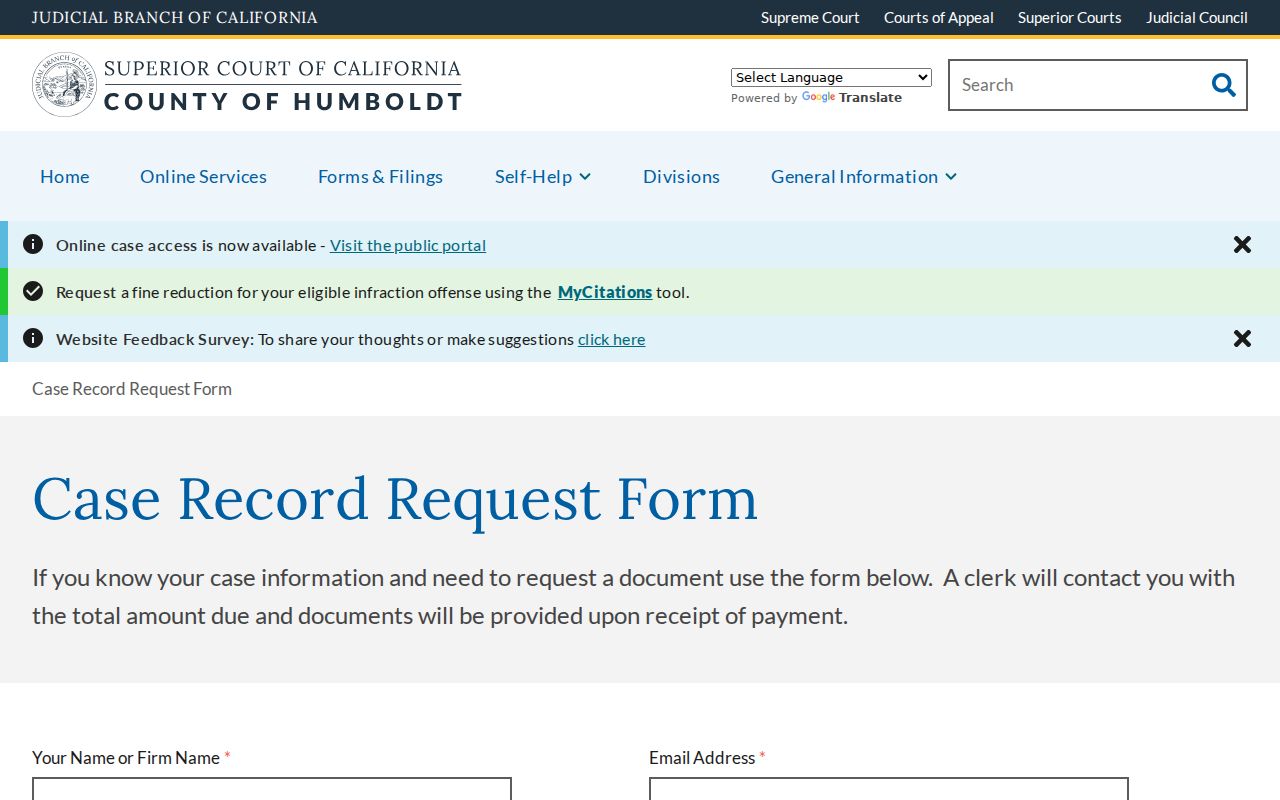
The request screen is a path to an identified court record, not an open substitute for a protected case file.
The courthouse and clerk route also matters. The research lists clerk service at 421 I Street, Eureka, with public access and records questions, while the courthouse complex is at 825 Fifth Street. Research longer than ten minutes is listed at $15 under Government Code section 70627(c); the local schedule lists certification, copies, and offsite retrieval fees. For a federal case, use the PACER Case Locator and check its current fee schedule before ordering.
Eureka Professional Roles in Public Filings
A public professional license or business filing can help resolve a Eureka name when the question concerns a disclosed public role. California DCA search supports board, license type, license number, business name, first name, last name, city, state, and ZIP fields. The California State Bar and Contractors State License Board provide board-specific routes. These results identify a credential or filing role, not a home.
California SOS bizfile searches by entity name or number and can expose filed Statements of Information. The SOS warns that complete ownership, phone, email, subsidiaries, and associated businesses are generally not made of record. Read the role and filed date as written, then compare the result with an APN, court case, directory year, or public business name.
The umbrella California DCA license search and the State Bar attorney search show the kind of board-specific lookup that can corroborate a public affiliation.
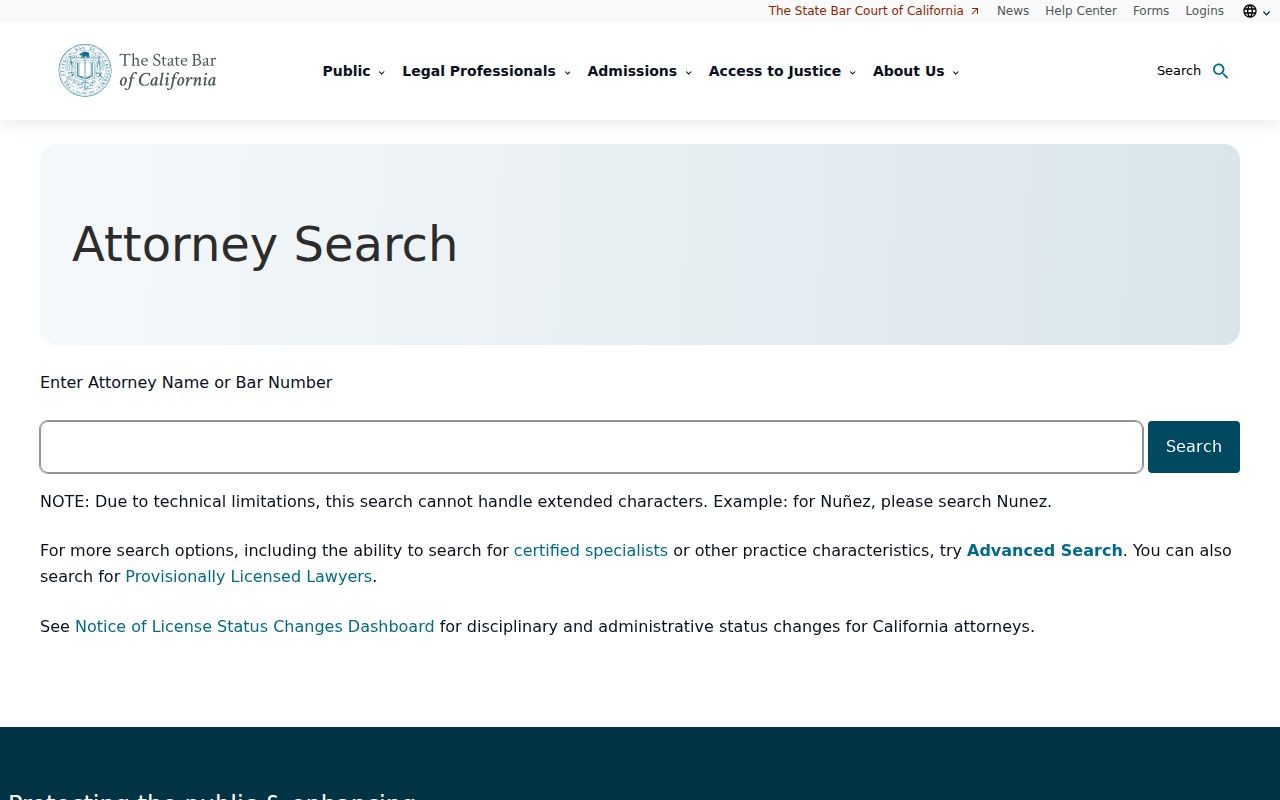
A license result supplies status and credential context when published; it does not prove residence.
For construction records, the California contractor license search can be checked by license number, business name, or personnel name.
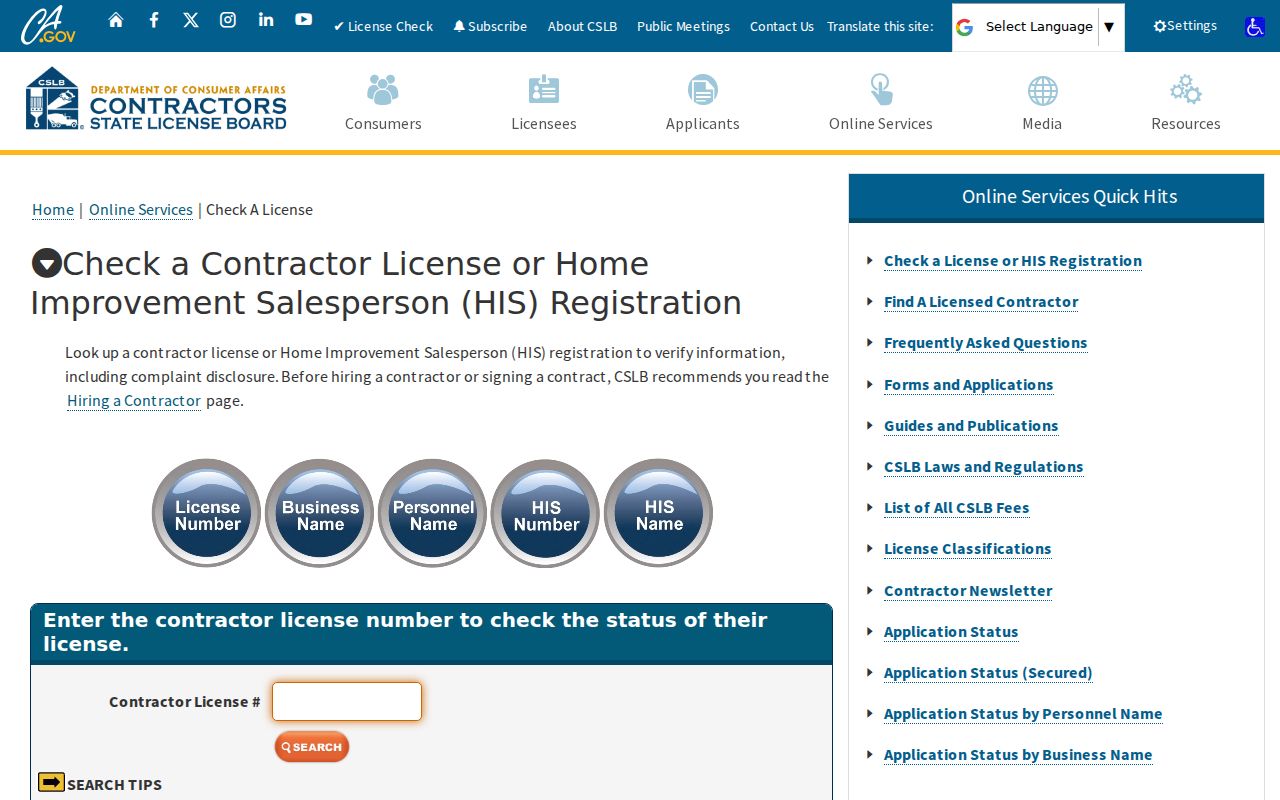
Use the exact license number when one appears in a permit or public filing; a common name is a weak match.
Confirm Your Own Eureka Voter Status
California My Voter Status asks for first name, last name, date of birth, and an identity value such as the last four digits of a California driver license or identification card or the last four digits of a Social Security number. It is an authenticated self-lookup. It does not expose a public name list, street roster, ZIP result, or neighbor search.
Humboldt Elections can explain the regulated file route at 2426 Sixth Street or 707-445-7481. California Elections Code section 2194 limits routine release of voter information to election, scholarly, journalistic, political, or governmental purposes. A full or specific-voter application requires identity details, purpose, security commitments, and certification. Protected records and Safe at Home addresses stay out of the public result.
The California voter-status tool is appropriate for the voter checking their own record. A non-match means the identifiers or status need review, not that the person is absent from Eureka.
The California voter-file request instructions supply the purpose and identity rules for a fuller file.
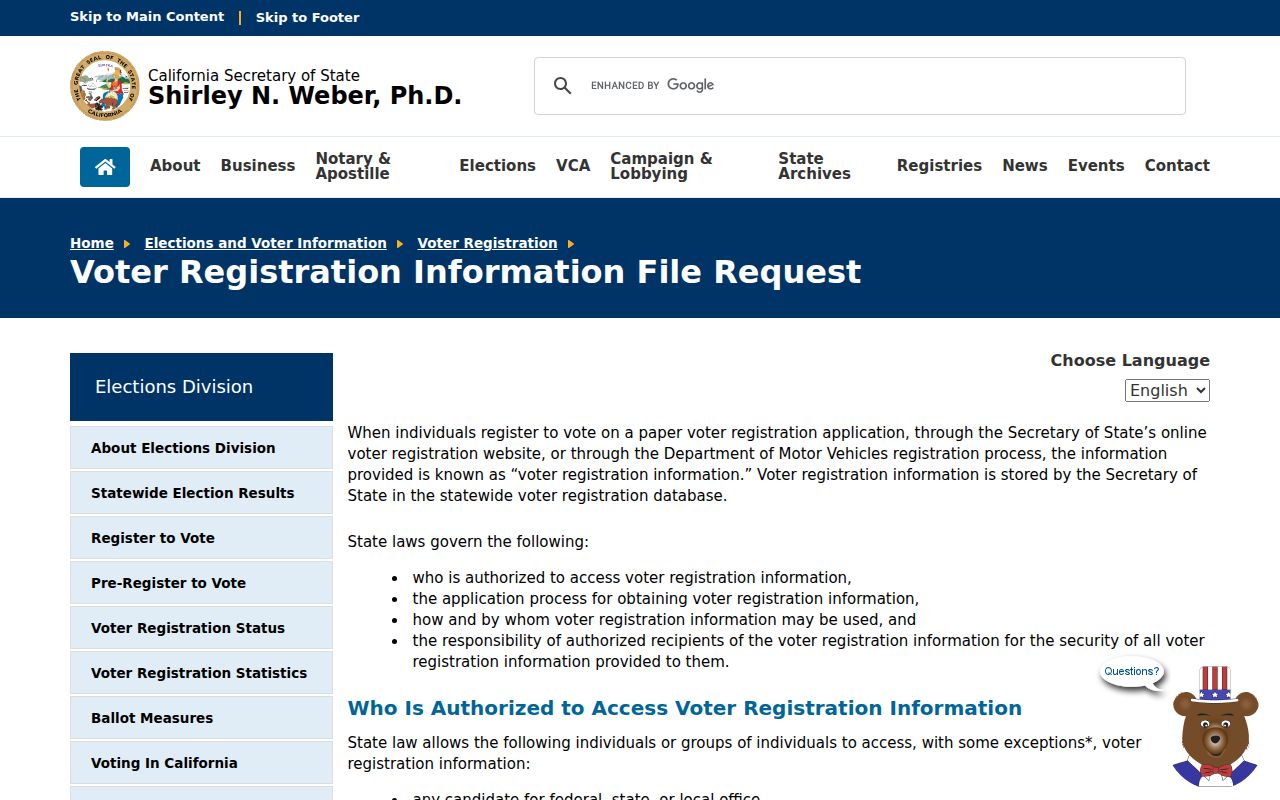
The voter-file application image reinforces the difference between an authenticated check and a purpose-limited research request.
Eureka Vital Records and Eligibility
Humboldt County is normally the local route for authorized birth, death, and marriage copies from events it holds. CDPH is the statewide mail route for California records beginning in July 1905. Birth, death, and marriage applications ask for the applicant, event, names, date and place, relationship, purpose, signature, and copy count. An authorized mail request can require a notarized sworn statement. Informational copies have a different use and are marked as not valid to establish identity.
The 2026 Humboldt schedule lists $31 for a birth copy, $26 for a death copy, and $19 for a marriage copy. Public marriage-license issuance is $78, while confidential issuance is $80. A confidential marriage copy is limited to a party or court-authorized requester. Adoption records and the actual divorce decree follow court or statutory routes. CDPH's divorce certificate covers only the fact of dissolution in its limited 1962 through June 1984 index.
Use the CDPH Vital Records guidance, current CDPH fee page, and the Humboldt 2026 fee schedule with current forms before mailing. The custodian, not a name-search result, decides eligibility and copy type.
Eureka Probate Heir Trail
For an estate question, search Humboldt Superior Court probate matters by case name or number, then request the public file. Petitions, notices, and orders may identify a personal representative, beneficiary, or mailing contact. The role must be read from the order or will. An obituary can suggest a relationship, but obituary wording alone does not establish heirship.
Pair the probate record with the Recorder's deed or other instrument and a death or cemetery source. The sequence is stronger when the dates, person, address, and legal role agree. Sealed or redacted material may stop the trail, and a public filing can still omit a private household member who owns no property.
The court research request route supports older or uncertain files, with the published research and copy fees checked before ordering.
Eureka Adoption and Classmate Routes
California does not provide a public adoption-name search. An adult adoptee or birth parent should use the California Department of Social Services adoptee-information route for non-identifying background and authorized contact options. Adoption court files remain confidential. Do not infer a protected identity from a deed, obituary, directory, or open name index.
For a former classmate, start with Eureka High and other local yearbooks in the Humboldt Room, Cal Poly special collections, and newspaper archives. Confirm a repeated name with a later city directory, obituary, or another local clue. A yearbook mention is a school-era fact, not a current address. The local collections are better suited to reconnecting through shared history than to casual current-address browsing.
The California adoptee information page states the official route for protected family-contact questions.
Legal Limits on a Eureka Resident Lookup
California's access law does not make every name and address open. Safe at Home can provide qualifying people with a substitute mailing address and confidential voter treatment. Sealed court matters, juvenile and adoption files, confidential marriage records, protected vital material, DMV data, utility accounts, and other exempt records may be unavailable by design.
When a record is wrong, contact the office that created it. The Assessor handles assessment display issues, the Recorder handles indexing questions, the court clerk handles docket and file procedures, the licensing board handles credential records, and Elections handles a person's own registration. Preserve the APN, document, case, or license number and identify the exact field in dispute.
Lawful personal use. A Eureka resident lookup may support family history, estate research, or a legitimate records question. Do not use an index to stalk, harass, intimidate, or harm a person, and do not try to defeat a protected address.
The California Safe at Home program explains why a legitimate search may end at a designated address rather than a home address.