
Eureka Neighbor Sources by Block
A block lookup begins with the subject address and expands to the parcels that touch or face it. The county map and city map answer different land questions. The Assessor supplies the address-to-parcel bridge. The Recorder adds recorded ownership events after a party is identified. Reverse directories add historical names, not a current household count. The table keeps the block sources in their proper lane.
| Source | What it shows about a block | Access |
|---|---|---|
| Humboldt Web GIS | Adjacent parcels, APNs, aerials, hazards, and district context | Free map search by address or APN |
| Eureka Community Development GIS | Incorporated-city parcels, zoning, boundaries, and local land-use | Free city map gateway |
| Property Assessment Inquiry | Address-fragment matches and current assessment context | Free search; no owner-name query |
| Recorder index | Recorded title events after a party or deed reference is known | Free index from 1979; images partly paid |
| Reverse directories | Historical address-order names and nearby listings | Library, Society, or Cal Poly shelves |
| Neighborhood Watch | Voluntary organizing contact for a block, complex, park, business area, or marina | City contact; no public member roster |
A block lookup is strongest when it records each APN and source date. It should not claim that every person at a parcel appears in the result.
Eureka GIS Clicks Outward from a Parcel
Open Humboldt Web GIS with the full street address or APN. Zoom until parcel lines and street numbers are legible, then click the subject parcel and the lots beside, behind, and across the street. Save each neighboring APN. Repeat in Eureka's Community Development map when the parcel is inside the incorporated city because county zoning and land-use labels are omitted there.
The map is a planning aid, not a survey. Humboldt warns that mapped positions may be displaced by about 50 feet in urban areas and 400 feet in rural areas. Alleys, flag lots, multi-parcel sites, and corner parcels can make the nearest numbered address different from the legally adjacent parcel. Use the County Surveyor for recorded map and boundary questions.
Neighbors should be defined by the parcel relationship first, then by any voluntary or historical source that supports the question.
Use the Humboldt GIS viewer to start, then compare the Eureka city GIS gateway for local jurisdiction.
Note: Record the APN from the map before carrying a neighboring parcel into the Assessor inquiry or Recorder index.
Build a Eureka Block List from APNs
APNs keep a block list tied to land rather than to a loose street-number guess. Start with one subject APN, list the parcels that touch or face it, and add the cross street and map position for each. Search each address fragment in the Property Assessment Inquiry. If a public detail does not show a needed owner field, use the Assessor counter rather than guessing from a mailing clue.
Carry a verified owner name or document reference to the Recorder. Search spelling variants, capture the instrument or book/page, and keep the recorded role separate from the person who may occupy the parcel. For a historical block, use reverse directories and Sanborn sheets to test older numbers and structures.
The useful flow is simple: subject address → parcel APN → adjacent APNs → assessment context → recorded party → historical or civic corroboration. Each arrow is a handoff, not proof that the next record answers the prior question.
- APN
- The Assessor's administrative parcel identifier used to connect the assessment inquiry and GIS.
- Adjacent parcel
- A parcel that touches or is legally near the subject parcel; map proximity should be checked against recorded geometry.
- Owner
- A recorded or assessment-related interest holder, not a complete list of occupants.
- Occupant
- A person reported in a directory or other source as associated with an address for a particular time.
Eureka Owners and Occupants Differ
A parcel owner, tax-mail recipient, situs address, and actual resident are different facts. The owner may live elsewhere. A mailing address may belong to a trust, agent, or PO Box. A deed may name a lender or lienholder who never occupied the property. Renters, relatives, roommates, and guests generally do not appear in title records.
The same caution applies to a neighborhood list. A name from a directory is a reported publication-year association. A name from a deed is a recorded party role. A city permit may name an applicant or professional. Use the record to ask the next source a narrower question, not to announce who lives in a house.
Local distinction. In Eureka, the Assessor's situs, the tax mailing address, the APN, and the actual household can point to different facts. Label each one before comparing neighbors.
Eureka Voter File at Block Scale
California's voter status tool is an authenticated self-check, not a public neighbor directory. A fuller voter-file request is limited to election, scholarly, journalistic, political, or governmental purposes and requires identity details, a stated use, security promises, and certification. Protected addresses and Safe at Home records are withheld.
Do not imply that a ZIP or street can be browsed through the voter form. Participation history never shows ballot choices, and registration status can change with list maintenance, confirmation notices, address updates, or duplicate records. A lawful block study of Eureka neighbors should use parcel-by-parcel property evidence and historical sources unless the requester qualifies for the regulated file route.
The Humboldt Elections information page gives the local contact and permitted-use boundary.
Eureka Neighborhood Watch Contact Layer
Eureka Police Neighborhood Watch is a voluntary organizing channel for a block, apartment complex, park, business area, public complex, or marina. A coordinator and block captain recruit and update members. The city says signs usually follow enrollment of at least half of the households, but it does not publish a member roster.
That makes Neighborhood Watch a better route for meeting actual neighbors than a compiled list. It is an “eyes and ears” program, not a vigilante group. Emergencies go to 911, while the city page lists non-emergency dispatch at 707-441-4044 and Crime Prevention at 707-441-4373.
Contact the Eureka Neighborhood Watch program when the goal is voluntary block organization, not person identification.
Eureka Main Street and Civic Contacts
Not every useful neighbor connection is a residential directory. Eureka Main Street and EBIDA cover the A through I Streets and waterfront through Eighth Street as a business improvement district. City boards and commissions provide public meeting and appointment information across twelve active bodies. These channels can show civic participation or a public contact, but they do not publish a residential member roster.
For a block near the central grid, a public board notice, neighborhood event, or business district meeting can help a resident connect with the community without asking an office to reveal a private household. Keep the contact layer voluntary and do not infer membership from a street or subdivision name.
The Eureka Main Street page and city boards and commissions page are public civic routes, not neighbor databases.
Eureka Custody Reports Are Not Block Rolls
Humboldt jail reports answer a custody question, not a neighborhood question. A booking or release report can carry a name, booking or release data, and an allegation or status. An allegation is not a conviction, and a custody location is not a home address. The local channel is operational and current, not a complete historical resident index.
State prison, federal custody, and statutory registry tools have separate limits. The California CDCR locator is a custody search, not a home-address source. A public-safety record should never be used to infer who lives beside a parcel, and absence from an online result does not prove a person is absent from the community.
The Humboldt jail reports page is the source for this narrower local record category.
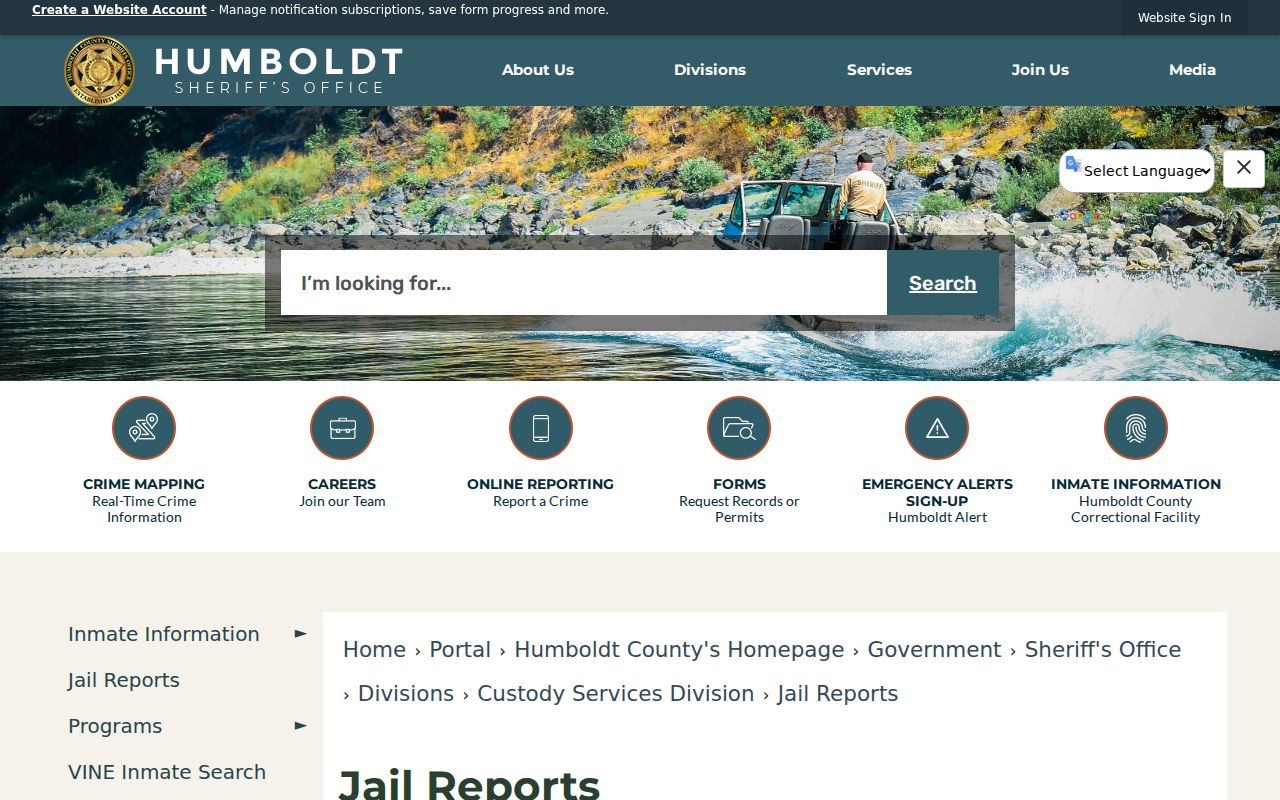
The custody report capture belongs to a separate official channel and should not be folded into a block roster.
Eureka Official Rolls and Compiled Leads
Official rolls and commercial compiled leads serve different purposes. County maps and recorded instruments point back to a custodian. Compiled products merge public records and purchased data, may lag corrections, and can combine same-named people. A comparison keeps a neighbor search tied to the source that can correct the field.
| Source category | Useful for | Limit | Safer follow-up |
|---|---|---|---|
| Parcel and GIS records | Adjacent APNs, mapped land, jurisdiction | Map displacement and no complete household list | Confirm with Assessor, city map, or Surveyor |
| Recorded documents | Party role, title event, document date | Names do not equal occupants | Read the deed or filing and preserve its reference |
| Historical directories | Past address-order names and nearby listings | Gaps, initials, OCR, and changing scope | Compare year, census, deed, obituary, or map |
| Compiled commercial lead | Possible name or address clue | Stale, merged, incomplete, and often paid | Return to the originating official or archival record |
California privacy rights also apply to compiled data. The source that hosts a public deed is not the same as a commercial compiler, and deleting a compiled profile does not amend the county record.
The California Attorney General privacy overview explains the consumer-rights layer.
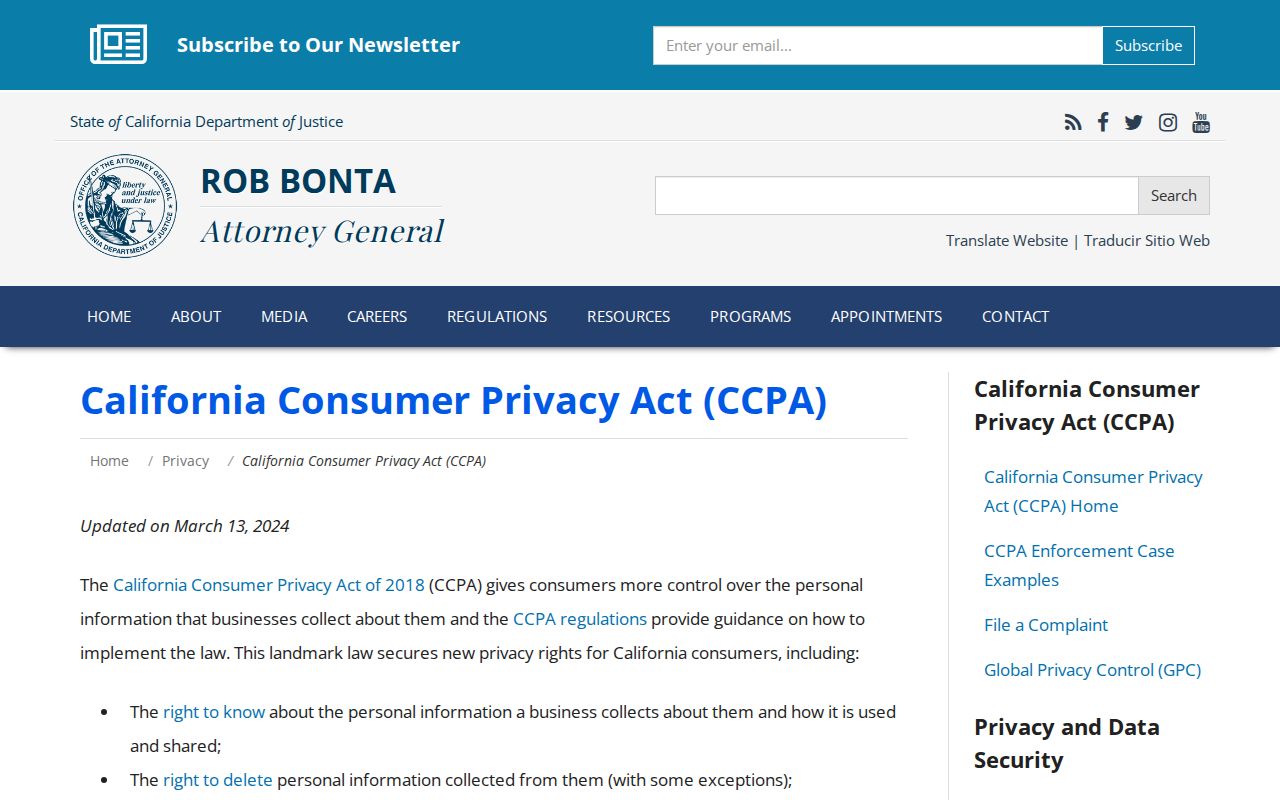
Privacy rights can limit compilation and correction requests, but they do not turn the official record into a complete block directory.
The California Privacy Protection Agency's DROP platform offers a centralized deletion and opt-out route for registered data brokers, subject to identity matching and statutory exceptions.
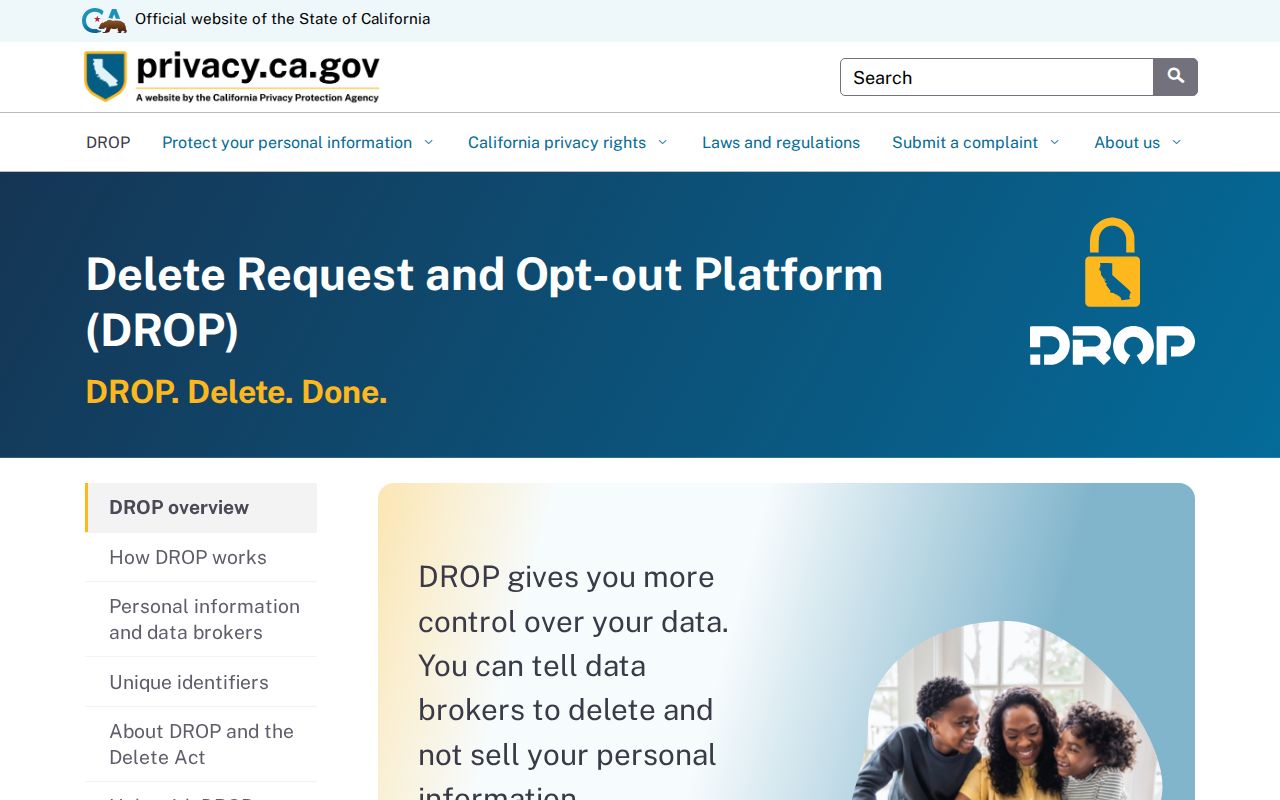
DROP changes how a person can request deletion from participating brokers; it does not erase a deed, court file, or other record at its official custodian.
Where a Eureka Neighbor Search Stops
Safe at Home can provide qualifying survivors and certain protected workers with a substitute mailing address, mail forwarding, and confidential voter treatment. DMV personal data, utility customer information, protected victim data, sealed court and vital records, and unrecorded household members remain outside a normal block map. A citywide HOA or residential-association member directory was not verified in the research, so none should be inferred from a subdivision name.
California Megan's Law is a statutory public registry with its own warning and disclosure categories. A profile or mapped address is not a general neighbor result, and not every registrant is posted. Use the official site exactly for its stated public-safety purpose and do not republish a person’s information to a block list. The word neighbors does not turn a protected record into a public roster.
The California Megan's Law site is the source for that separate registry channel.
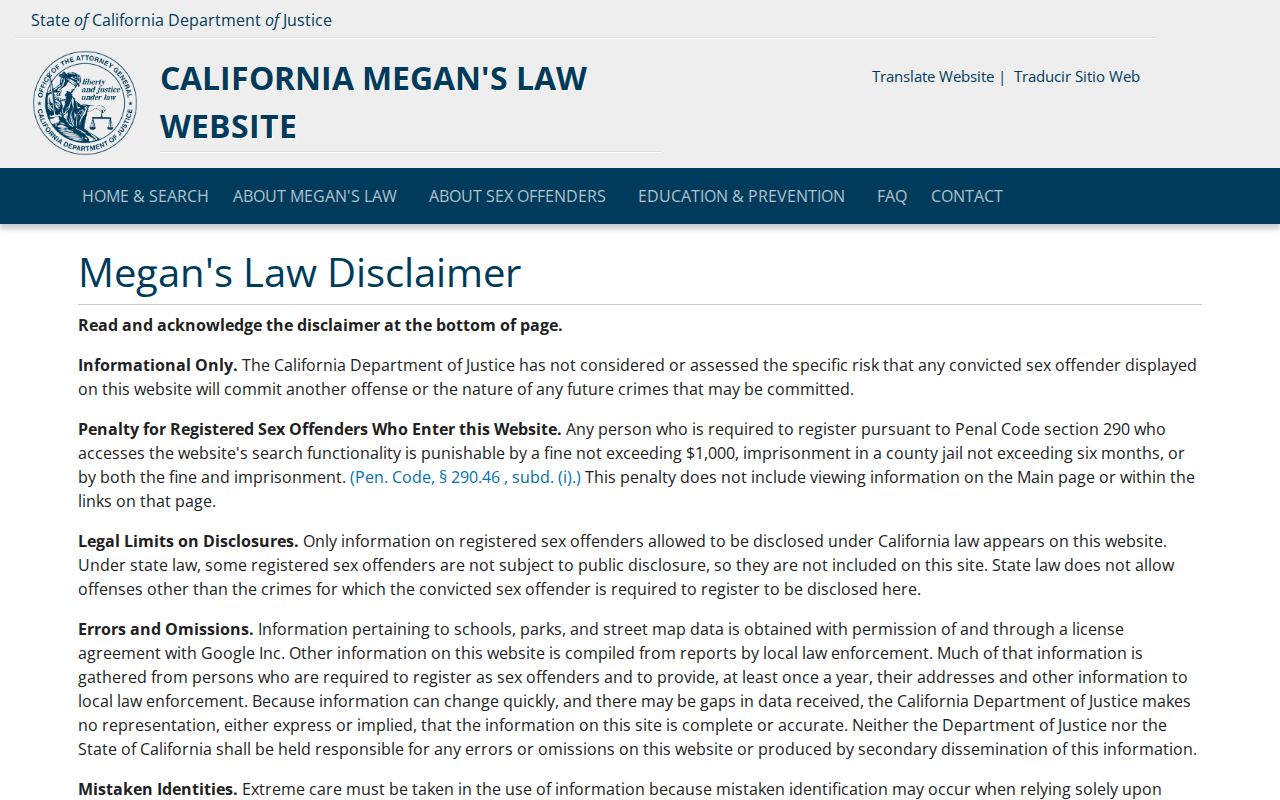
The registry capture shows why a public record can still carry use limits and category-specific warnings.
Lawful personal use. A Eureka neighbor lookup may support a property question, family history, or voluntary community connection. Do not use parcel, court, voter, registry, or compiled data to stalk, harass, intimidate, or harm another person.
When the goal is the full record chain of one named street, move to the Eureka street directory. When the goal is a protected person, stop at the privacy boundary.